

When I talk with CEOs today, whether they are new to the role or on their third or fourth run, I hear a version of the same thing:
“This job feels different than I expected.”
Not harder, necessarily.
Different.
The pace is faster. The pressure is louder. The margin for error is thinner. And the number of things landing on the CEO’s desk at the same time feels overwhelming in a way it didn’t ten or even five years ago.
This is today’s CEO reality.
The role has become more exposed, more compressed, and more volatile, and most CEOs are leading in environments where the rules are still being written in real time.
CEO tenure is shorter. Expectations are higher. And at the same time, many CEOs are being asked to run today’s business while reinventing tomorrow’s, often with leadership teams that are also in flux.
What doesn’t get talked about enough is how much leadership behavior and culture are shaped by that instability, especially at the top.
Leadership Changes Don’t Stay at the Top
One of the most consistent patterns I see is this:
When the CEO role is in motion, the organization feels it almost immediately.
Sometimes it’s subtle. Sometimes it’s obvious. But it always shows up.
Executive team members start watching their words more carefully.
Decisions slow down.
People hedge.
Collaboration gets replaced by quiet self-protection.
Even strong leaders can become cautious when the ground feels unstable.
CEO transitions, and the executive turnover that often follows, create a ripple effect. And that ripple moves faster through behavior and culture than it ever does through strategy decks or org charts.
Culture doesn’t break overnight.
It frays.
And by the time performance numbers reflect it, the real damage has already been done.
That’s why supporting CEOs today isn’t just about the individual.
It’s about protecting the leadership system and the culture it creates.
What CEOs Are Really Up Against Now
Regardless of experience level, most CEOs today are dealing with a few structural realities at the same time:
- The business model is under pressure
- Stakeholders are louder and less patient
- The leadership team is changing or about to
- And everything is happening in public
Even seasoned CEOs find themselves recalibrating faster than they ever have before.
And while the role looks powerful from the outside, it can be surprisingly isolating on the inside.
As one CEO recently said to me:
“Everyone talks to me all day. But very few people actually tell me the truth.”
That’s not a personal failure.
That’s today’s CEO reality.
A Practical Framework for CEOs Today
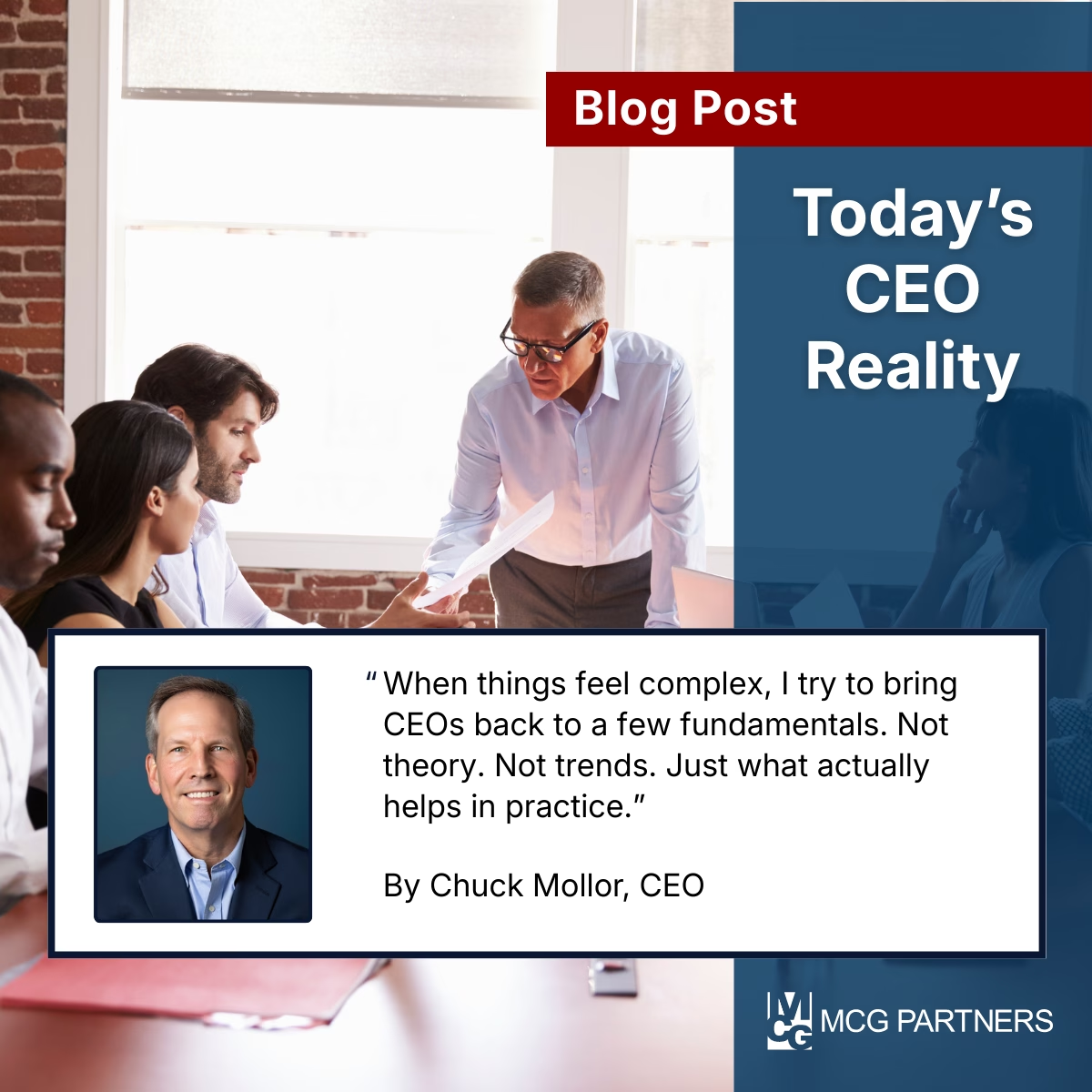
When things feel complex, I try to bring CEOs back to a few fundamentals. Not theory. Not trends. Just what actually helps in practice.
Here are three areas every CEO needs to stay focused on right now, especially in times of change.
1. Stabilize the Leadership System Before You Push for Results
Most CEOs are wired to move fast. That instinct doesn’t go away when the pressure rises, it usually accelerates.
But when leadership roles are shifting, or trust is unsettled, pushing harder on results too early often backfires.
The first job is stabilization:
- Clarifying roles and decision rights
- Resetting expectations with the executive team
- Making sure people know what matters now and what doesn’t
When the leadership system stabilizes, execution speeds up naturally.
When it doesn’t, everything feels harder than it needs to be.
2. Pay Attention to How Your Team Is Showing Up, Not Just What They’re Saying
In volatile environments, leaders rarely say, “I don’t feel safe.”
They show it instead.
They stop challenging each other.
They over-prepare.
They wait for direction.
This is where culture lives, in behavior, not values statements.
CEOs who slow down enough to notice these shifts can intervene early. Those who don’t often end up surprised later.
One of the most important questions a CEO can ask right now is:
“How is my leadership team actually operating under pressure?”
3. Don’t Carry the Weight Alone
The myth of the CEO as the lone decision-maker is one of the most damaging ideas in business.
Every CEO needs a place to think out loud -without politics, posturing, or consequences. That might be a coach, a peer group, or a trusted advisor. What matters is that it’s real.
Isolation doesn’t make leaders stronger.
It makes decisions weaker.
The best CEOs I work with aren’t the ones with all the answers. They are the ones who have built support around how they think, decide, and show up.
What Supporting the CEO Really Means
Supporting CEOs today isn’t about protecting feelings or lowering standards.
It’s about:
- Helping leaders see the system they are operating in
- Reducing unnecessary friction at the top
- And keeping culture from eroding during periods of change
When CEOs are supported well, leadership teams work better.
When leadership teams work better, culture stabilizes.
And when culture stabilizes, performance follows.
That’s not soft.
That’s practical.
A Final Thought
The CEO role has always been demanding.
What’s different now is the speed, visibility, and ripple effects of leadership change.
This is the modern CEO reality.
And in this environment, CEO support isn’t about making the job easier.
It’s about making success sustainable for the leader, the team, and the organization.
The CEO role has always been demanding. What’s different now is the combination of forces shaping it. In this environment, supporting the CEO isn’t about making the job easier. It’s about making success sustainable for the leader, the team, and the organization they serve. If you would like to learn more about executive coaching and executive team development & alignment for CEO’s and their executive teams, please reach out to my team at MCG Partners: Frank.Dadah@mcgpartners.com