
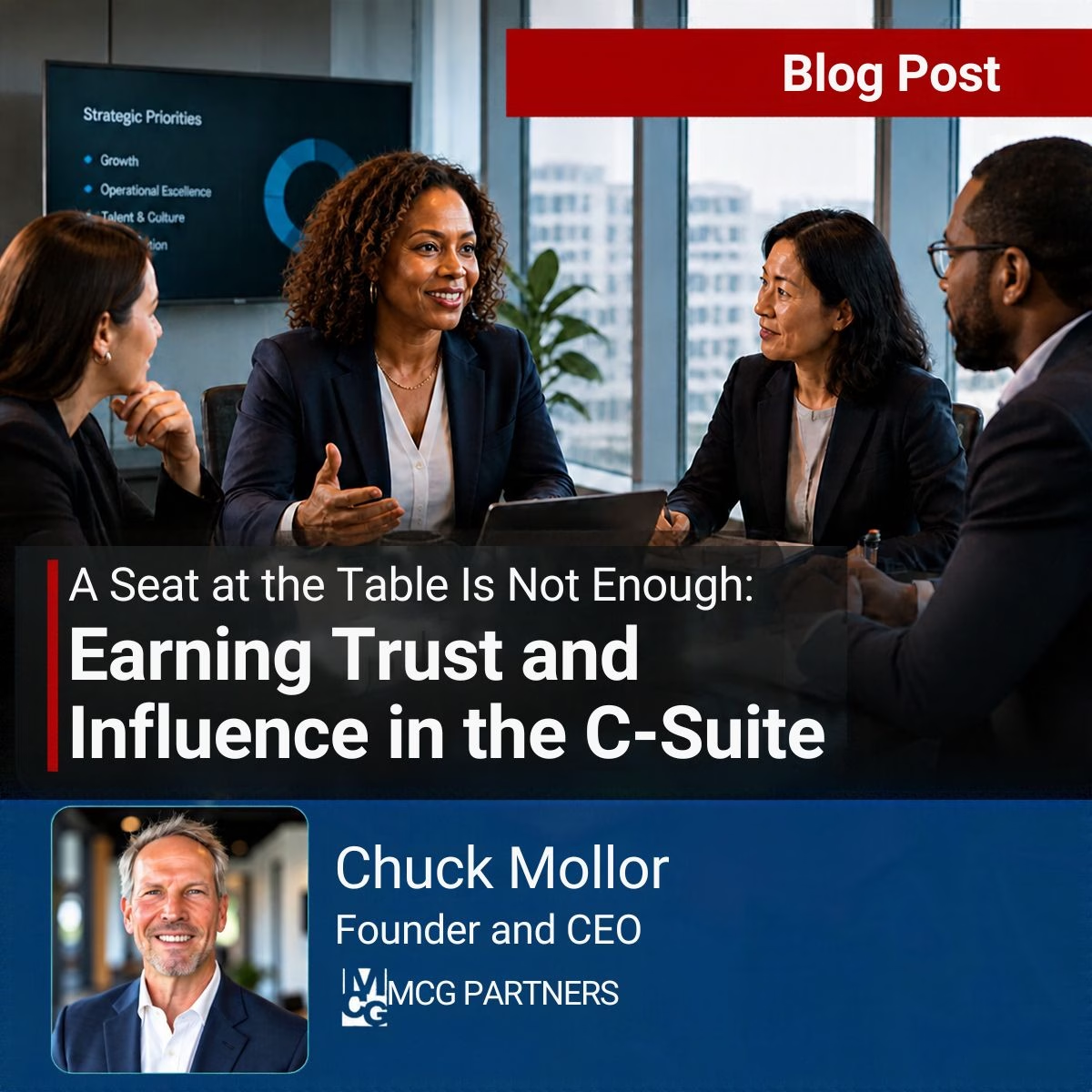
At the Fall 2026 Strategic HR Conference at Mt. Washington Retreat, I asked a room of HR executives a question: Which conversation is hardest: challenging an executive peer, giving the CEO advice they may not want to hear, raising a leadership or talent risk, or addressing tension on the executive team before it grows?
Hands went up across the room. Then I asked a more important question: What does it cost your organization when those conversations don’t happen?
That is where executive leadership gets real. Not in the strategy deck. Not in the organization chart. But in the moments when a leader has to exercise judgment, challenge an assumption, take a thoughtful risk, or say something that may be uncomfortable but needs to be said.
For HR executives, earning a seat at the executive table is not the destination. The real opportunity is to influence the quality of the decisions made there.
Credibility is earned when the stakes rise
I have spent nearly four decades working with, being a C-level executive, and coaching and advising executives and leadership teams. I have also built and led businesses myself. I’ve experienced the pressure of making decisions, the consequences of getting them wrong, and the responsibility of leading people through uncertainty.
One lesson has remained consistent: a sound strategy is necessary, but it is not enough. What often determines whether organizations execute successfully is how leaders show up and behave when the stakes and pressure rises.
Trust erodes when difficult truths are delayed. Alignment breaks down when disagreement goes unspoken and the collective voices are not heard. Execution suffers when leaders leave a meeting appearing committed but act differently afterward. Those are not simply interpersonal issues. They are business issues.
Deloitte’s 2026 Global Human Capital Trends research points to the broader shift: 66% of C-suite leaders say moving beyond traditional functional boundaries is highly important, while seven in ten business leaders view speed and agility as central to competitive strategy. HR must help the enterprise anticipate risk, make better decisions, and deliver results.
Four behaviors that distinguish trusted executives
In our workshop, I challenged leaders to think about four observable behaviors: judgment, candor, alignment, and follow-through.
Judgment is the ability to weigh trade-offs and act without perfect information. Candor is telling the truth early enough to make a difference, including owning mistakes. Alignment is debating differences openly and then putting the enterprise ahead of a functional agenda. Follow-through is taking responsibility for the decision, the outcome, and what must change when things do not go as planned.
These are not qualities we can claim about ourselves. They are behaviors other people experience. That distinction matters.
I asked participants to consider one executive relationship and reflect: What can this person consistently count on from me? Where do I soften or delay an important truth? How do I react when my advice is challenged? And what difficult conversation am I avoiding?
These are questions every CEO, CHRO, and executive team member should be willing to answer.
Understand the person behind the title
Influence also requires understanding how other executives think and respond. Some want quick action; others need time and evidence. Some welcome direct debate; others prefer to reflect before responding. Under pressure, those differences can become more pronounced.
At MCG Partners, we use behavioral insights & analytics, leveraging the Predictive Index, to help leaders better understand themselves and one another. The goal is not to put people in boxes. It is to ask better questions, adapt how we communicate, make decisions, deal with conflict, change and risk, to have more productive conversations and decisions… especially when the issues are difficult.
The Capitol Hill Effect: influence begins before the meeting
In my book, The Rise of the Agile Leader. Can You Make The Shift?, I describe what I call the Capitol Hill Effect. Important decisions rarely begin with everyone hearing an idea for the first time around a conference table. Effective leaders understand stakeholders’ perspectives before the formal discussion.
Who supports the proposal? Who is concerned? What risk matters to them? Who needs more information? And whose perspective have we not yet heard?
This is not about private deals or bypassing governance. It is about listening, anticipating legitimate objections, and creating the conditions for an honest discussion and a better decision.
When the conversation itself becomes difficult, I encourage leaders to acknowledge the pressure the other person is facing, ask what they are seeing, connect the issue to business consequences, and then offer a clear recommendation. Candor and respect are not competing choices.
Connect leadership and culture to business performance
Another message I emphasized at Mt. Washington: leadership and culture are not “soft” issues. They shape how an organization performs.
Culture is what leaders model, reward, and tolerate. Employees experience it through the decisions leaders make and the behaviors they allow. Those experiences influence trust, accountability, engagement, retention, and ultimately the ability to serve customers and execute strategy.
Research reinforces the connection. McKinsey has reported that organizations with effective top teams were nearly twice as likely to achieve above-median financial performance. Gallup’s engagement research has found a 23% median profitability difference between top- and bottom-quartile business units. These are associations, not promises of a specific financial return—but they make a compelling case for treating leadership effectiveness as a business priority.
For HR leaders, the opportunity is to move beyond presenting a turnover figure or an engagement score. Explain the signal, connect it to a business consequence, and recommend a course of action. For example: We are losing leaders critical to a transformation; that threatens delivery; here is what I recommend we do, and how we will measure progress.
That is the kind of insight CEOs and boards need: not more data for its own sake, but better judgment about succession, capability, culture, talent risk, and organizational performance.
One relationship. One conversation. One visible change.
I closed the workshop with a challenge I want to extend to every executive reading this: Choose one relationship that matters to your ability to lead. Identify one conversation you have been putting off. Then make one visible change in the next 30 days something the other person can actually experience.
If trust has weakened, acknowledge it. Listen to how the other person experienced the situation. Agree on what needs to change. And then demonstrate that change through consistent follow-through. Trust is not rebuilt through a speech. It is rebuilt through behavior.
The next important conversation you have may do more to move your organization forward than another report, another presentation, or another meeting.
Understand the person. Ask the hard question. Help the team decide. Then follow through.
Because great HR leaders and great executives do more than support decisions. They help improve them.
Thank you to the leaders who joined me at Strategic HR at Mt. Washington and contributed so thoughtfully to the discussion. I welcome the opportunity to continue the conversation about executive leadership, trust, alignment, and organizational performance.
Chuck Mollor | chuck.mollor@mcgpartners.com | www.mcgpartners.com
Frequently Asked Questions
How can HR leaders earn trust and influence in the C-suite?
HR leaders earn influence by improving the quality of executive decisions, not just by holding a seat at the table. Chuck Mollor, CEO of MCG Partners, points to four behaviors that trusted executives show consistently: judgment, candor, alignment, and follow-through. Credibility is built in the moments when stakes rise and a hard truth needs to be said.
What are the four behaviors that distinguish trusted executives?
The four behaviors are judgment, candor, alignment, and follow-through. Judgment is weighing trade-offs and acting without perfect information. Candor is telling the truth early enough to matter, including owning mistakes. Alignment is debating openly, then putting the enterprise ahead of a functional agenda. Follow-through is owning the decision, the outcome, and what changes if plans don’t work.
Why is a seat at the executive table not enough for HR?
A seat at the table gives HR access, but influence comes from shaping the decisions made there. Trust erodes when difficult truths are delayed, and alignment breaks down when disagreement goes unspoken. HR executives who raise talent risks, challenge assumptions, and connect people issues to business results become trusted advisors rather than observers.
What is the Capitol Hill Effect in leadership?
The Capitol Hill Effect is Chuck Mollor’s term, from his book The Rise of the Agile Leader, for building understanding with stakeholders before a formal decision meeting. Effective leaders learn who supports a proposal, who is concerned, and what risks matter to each person. It is about listening and anticipating legitimate objections, not making private deals or bypassing governance.
How should HR leaders present people data to CEOs and boards?
HR leaders should explain what a metric signals, connect it to a business consequence, and recommend a course of action. A turnover figure or engagement score on its own rarely moves a decision. For example: “We are losing leaders critical to a transformation; that threatens delivery; here is what I recommend, and how we will measure progress.”
Is there evidence that leadership and culture affect business performance?
Yes, research shows a strong association between leadership effectiveness and financial results. McKinsey has reported that organizations with effective top teams were nearly twice as likely to achieve above-median financial performance. Gallup found a 23% median profitability difference between top- and bottom-quartile business units on engagement. These are correlations, not guarantees of a specific return.
How does understanding behavioral differences help executives work together?
Understanding how colleagues think and respond helps executives communicate, debate, and decide more productively, especially under pressure. Some leaders want quick action while others need time and evidence. MCG Partners uses The Predictive Index to help leaders understand their own behavioral drives and those of their peers, so they can adapt how they work together instead of putting people in boxes.
How can an executive start rebuilding trust with a colleague?
Start with one relationship, one conversation you’ve been putting off, and one visible change in the next 30 days. If trust has weakened, acknowledge it, listen to how the other person experienced the situation, and agree on what needs to change. Trust is rebuilt through consistent behavior, not a speech.