
Succession planning is no longer a peripheral HR function; it is the strategic backbone of organizational longevity and sustained competitive advantage. It’s the intentional, structured process of identifying, evaluating, and developing internal talent to seamlessly fill key leadership and critical roles across all levels of the business. Without this critical foresight and development strategy, organizations are dangerously exposed to severe instability, the non-recoverable loss of institutional knowledge, and debilitating operational disruptions the moment a critical employee departs.
A truly proactive succession strategy delivers operational continuity and unmatched resilience. It ensures smooth handoffs, minimizes expensive downtime, and protects the momentum of your most vital initiatives, from major projects to retaining & developing clients. Crucially, the plan is a powerful catalyst for a high-performance culture. When high-potential employees see a clear, structured, and achievable path for career advancement and development laid out before them, their morale, commitment, and loyalty skyrocket, significantly improving overall retention rates.
The Urgency: Why Invest Today?
The Volatile Talent Landscape
The modern workforce is defined by high mobility, and top performers are more difficult to acquire and retain than ever before. The ongoing talent wars make the risk of unexpected departures significant and costly. When a key role is suddenly vacant, external recruitment is time-consuming and expensive, often costing 150% or more of the role’s salary. Investing in a deep internal bench today transforms a reactive scramble into a strategic defense, ensuring you have capable, pre-vetted talent ready to step up immediately.
Closing the Institutional Knowledge Gap
As experienced leaders and specialists retire or move on, decades of irreplaceable, often tacit knowledge walks out the door. This is knowledge that is not documented in manuals but resides in experience, expertise, relationships, and judgment. Preparing the next generation now is the only way to effectively bridge this immense leadership and expertise vacuum and ensure that core operational and strategic competency remains intact. This transfer of knowledge is an active, mentored process that must begin long before retirement or resignation papers are filed.
Building Organizational Agility and Risk Mitigation
Recent global events have underscored that the most resilient companies are those that can be agile and pivot quickly. A solid succession strategy builds inherent organizational agility, allowing the business to navigate market shifts, crises, or rapid growth without losing focus or direction due to leadership and core expertise instability. Furthermore, it serves as a robust risk mitigation tool that meets the due diligence expectations of boards, investors, and key stakeholders.
The Critical Timing: Budgeting for 2026 Readiness
As we enter the end of October, the window for strategic investment in 2026 talent development is rapidly closing. The outcomes of effective succession planning, specifically, the need to secure funding for executive coaching, mentorship programs, and critical cross-functional assignments—must be quantified and codified now to align with the Q4 budget and strategic planning cycle. Delaying this analysis by even a few weeks means these vital development programs will likely miss the 2026 approval window, effectively pushing leadership readiness initiatives back a full fiscal year. By finalizing talent audits and development roadmaps this quarter, your organization ensures it can launch its leadership continuity programs effectively on January 1st, 2026, setting the stage for a strategically stable and capable new year.
The Dual Benefit: Fostering a Culture of Growth
The true value of succession planning extends beyond merely filling gaps, it lies in the growth process itself.
Targeted Development and Retention
The act of succession planning requires organizations to identify what capabilities they will need in the future and then create targeted development plans for current high-potential staff. This personalized investment signals trust and value to employees, boosting loyalty and performance. It allows the company to deliberately cultivate the exact skills required for tomorrow’s strategic challenges, rather than hoping external hires possess them.
Elevating Overall Talent Quality
By regularly assessing talent and potential, organizations gain profound insight into their current workforce capabilities and existing skills gaps. This clarity allows for more effective resource allocation in training, mentoring, and experiential learning programs. It shifts the company focus from simply managing headcount to aggressively developing human capital, which ultimately elevates the quality and competence of the entire leadership pipeline.
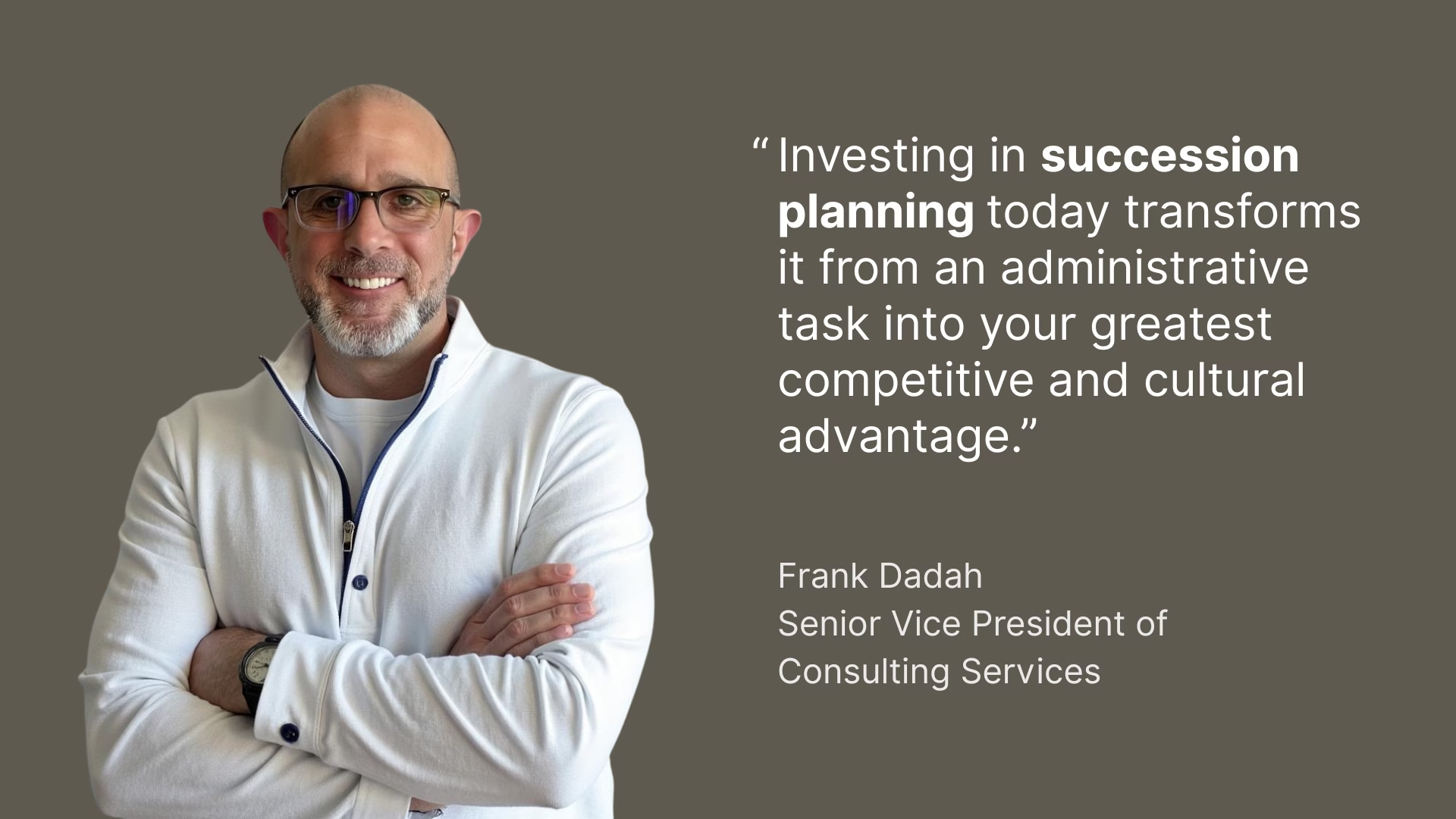
Investing in succession planning today transforms it from an administrative task into your greatest competitive and cultural advantage. It strategically positions your organization to own its future growth and ensures that capability is never contingent on chance. Don’t postpone this initiative; the stability, agility, and competence of your next generation of leaders depend on the investment you make now.
Frank Dadah is the Senior Vice President of Client Services at MCG Partners, a leadership, talent, and organizational development consulting firm. Frank works closely with executive leaders and teams to align strategy, culture, and talent in ways that drive measurable business performance. With extensive experience in leadership development, team effectiveness, and organizational transformation, he partners with clients to strengthen their leadership pipelines, enhance succession strategies, and build cultures of sustained excellence.
MCG Partners specializes in leadership, culture, and talent optimization helping organizations assess, develop, and align their people and culture to achieve strategic results. Through executive coaching, leadership development, succession planning, organizational consulting, and The Predictive Index®, MCG Partners empowers organizations to create resilient, agile, and high-performing leaders and teams.
To learn more about how MCG Partners can help your organization design and implement a comprehensive succession strategy, visit www.mcgpartners.com.