
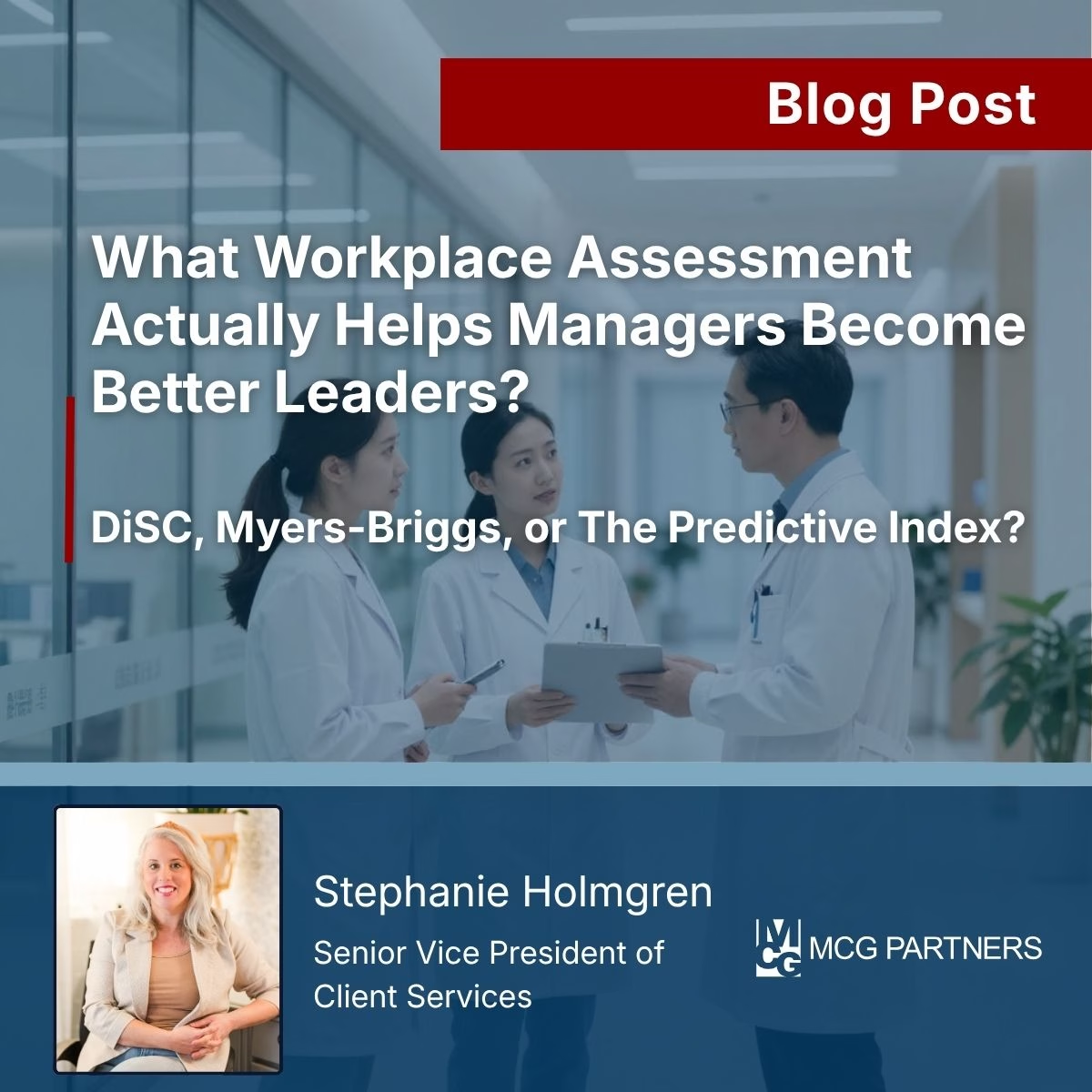
By Stephanie Holmgren, Vice President of Client Services
The Business Challenge
Organizations don’t struggle because managers lack technical expertise. They struggle because managers don’t always understand what motivates their people, how to communicate effectively, why conflict develops, or how to bring out the best in each employee.
Behavioral assessments can help, but they are not all designed for the same purpose. While many increase self-awareness, far fewer help managers become better leaders. That’s the distinction business leaders should understand.
Three Popular Assessments, Three Different Purposes
Myers-Briggs: Best for personal self-awareness and understanding personality preferences.
DiSC: Best for improving communication and interpersonal awareness.
The Predictive Index: Built specifically to help organizations hire better, develop stronger leaders, improve employee engagement, strengthen culture, retain talent, and drive better business performance.
The Predictive Index: Built for Better Leadership
The Predictive Index wasn’t created simply to tell people who they are—it was built to help leaders understand how to lead them.
Grounded in behavioral science, PI provides managers with practical, scientifically validated insights into how people communicate, make decisions, respond to change, solve problems, and what motivates them at work.
Rather than relying on intuition alone, managers can better coach, engage, develop, and retain their people.
Great Managers Don’t Lead Everyone the Same Way
One employee thrives on autonomy. Another needs structure. One values public recognition, while another prefers private feedback.
Great managers adapt their leadership to the individual. PI helps make that possible by providing practical insights managers can use every day.
Business Outcomes That Matter
Organizations don’t invest in assessments simply to generate personality reports. They invest to improve:
• Hiring quality
• Leadership effectiveness
• Employee engagement
• Employee retention
• Team performance
• Collaboration
• Organizational culture
• Succession planning
• Change adoption
Those are the outcomes executives care about and where PI delivers lasting value.
The Difference Isn’t the Assessment; It’s the Outcome
DiSC and Myers-Briggs help people better understand themselves.
The Predictive Index helps managers better understand the people they lead.
Ultimately, organizations succeed when managers know how to motivate, coach, communicate with, and develop each individual. PI was designed to help make those leadership decisions better every day.
Learn More
If you’re evaluating workplace assessments or would like to explore how The Predictive Index can improve hiring, leadership effectiveness, employee engagement, retention, and team performance, we’d be happy to help.
Learn more about MCG Partners’ Predictive Index and our other leadership development and organizational effectiveness solutions, go to our website, www.mcgpartners.com
About the Author
Stephanie Holmgren is a Vice President of Client Services at MCG Partners and a Predictive Index Certified Partner. She helps organizations improve hiring, leadership effectiveness, employee engagement, team performance, and organizational culture through behavioral science and talent optimization.
Frequently Asked Questions
What is the best workplace assessment for leadership development?
The best assessment depends on what an organization wants to accomplish. Myers-Briggs is commonly used for self-awareness, while DiSC focuses on communication styles. The Predictive Index is designed to help managers understand workplace behavior and apply those insights to hiring, coaching, team development, employee engagement, and leadership effectiveness.
How is The Predictive Index different from DiSC?
DiSC helps people recognize communication and interpersonal styles. The Predictive Index goes further by helping managers understand what drives workplace behavior, including how employees are motivated, make decisions, respond to change, and prefer to work. These insights can support practical decisions across the employee lifecycle.
How is The Predictive Index different from Myers-Briggs?
Myers-Briggs explores personality preferences and is often used to build personal self-awareness. The Predictive Index focuses specifically on workplace behavior and gives managers practical insights they can use to lead, coach, engage, and develop employees more effectively.
How does The Predictive Index help managers become better leaders?
PI helps managers understand that employees may need different levels of direction, autonomy, structure, communication, and recognition. Managers can use these insights to adapt their leadership approach, provide more effective feedback, reduce misunderstandings, and help each employee perform at their best.
Can The Predictive Index improve team performance?
Yes. PI can help teams understand how individual behavioral drives affect communication, collaboration, decision-making, and conflict. It can also reveal potential strengths and gaps within a team, giving leaders a clearer foundation for improving how people work together.
Can The Predictive Index be used for hiring?
Yes. Organizations can use PI to define the behavioral and cognitive requirements of a role, evaluate job fit, and make more informed hiring decisions. PI should be used as one part of a thoughtful selection process alongside interviews, experience, skills, and other relevant information.
Is The Predictive Index scientifically validated?
The Predictive Index assessments are grounded in behavioral science and supported by research into their reliability, validity, and fairness. This gives organizations a consistent, data-informed way to better understand workplace behavior while complementing—not replacing—human judgment.